You can make a rich turkey gravy base ahead of time and finish it with turkey drippings for deeper flavor on serving day.
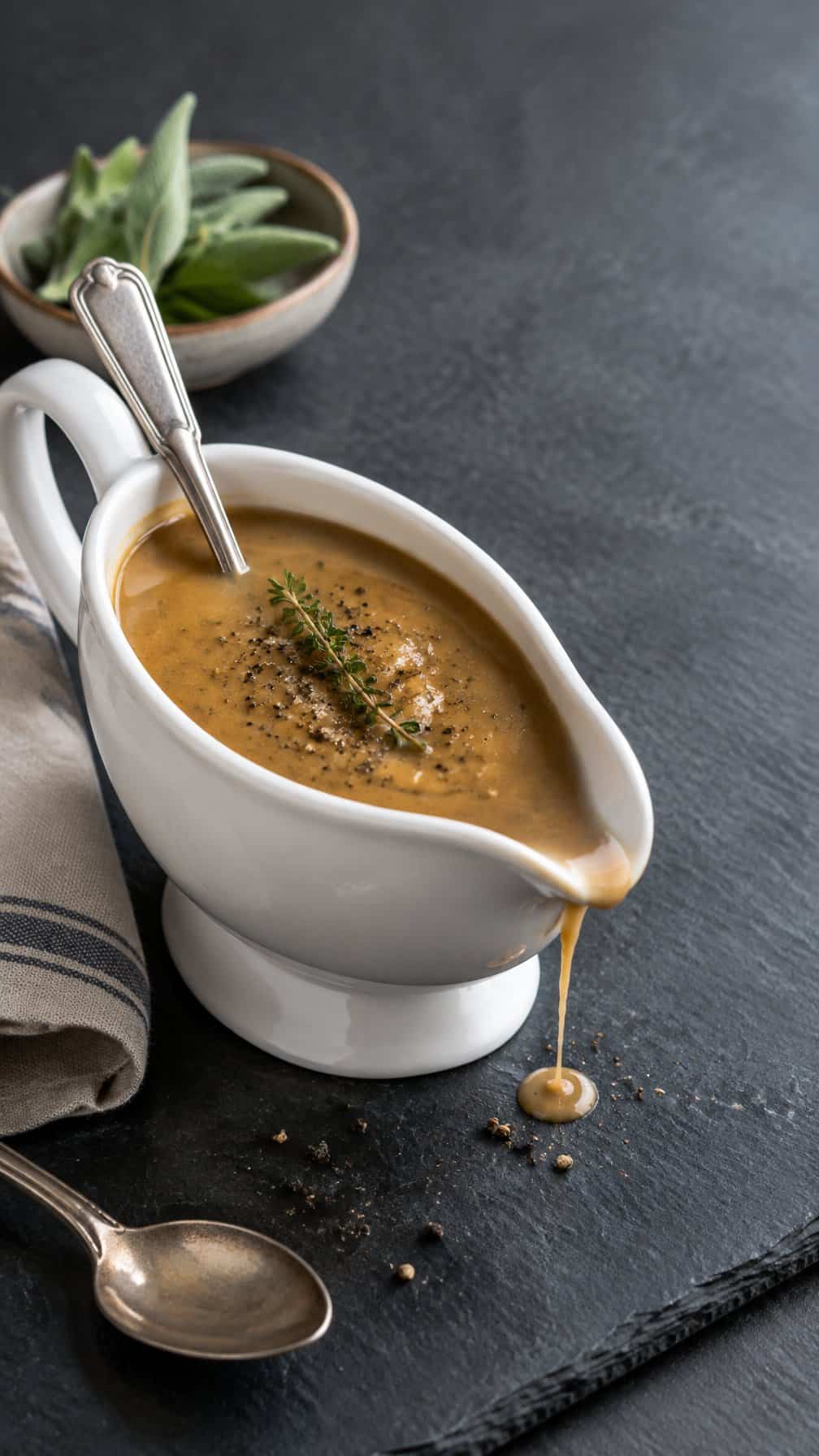
I make this turkey gravy recipe before the holiday rush, so you can focus on roasting the turkey and serving the meal. A simple roux and flavorful stock create a smooth base that reheats well.
When the turkey comes out of the oven, stir in the drippings for a savory finish. You’ll also find easy swaps, storage guidance, and serving ideas for this make-ahead gravy recipe.
Why You Will Love Rich Make-Ahead Turkey Gravy with Drippings Recipe
You can prepare this make-ahead turkey gravy before the busy holiday meal begins. I rely on this method when I want more space on the stove and less to manage while the turkey rests.
The gravy starts from scratch with roasted turkey pieces, vegetables, broth, and a simple flour roux. Together, they create a rich gravy with more depth than gravy made only from boxed stock.
- Make it early: Refrigerate it for a few days or freeze it for longer storage.
- Finish with drippings: Stir in strained turkey pan drippings before serving for fresh roasted flavor.
- Control the texture: Add broth if it thickens too much after chilling, or simmer it briefly if you want it thicker.
- Avoid lumps: Whisk the flour and fat until smooth before slowly adding the warm broth.
You still get the flavor of homemade turkey gravy on serving day without making every part at the last minute. The drippings add extra flavor, but you don’t have to depend on them for the whole recipe.
This is an easy turkey gravy approach for cooks who want reliable results. Keep your homemade gravy warm in a small saucepan or slow cooker while you serve the rest of the meal.
How to Make Rich Make-Ahead Turkey Gravy with Drippings Recipe
You build the gravy base before the holiday, then enrich it with turkey pan drippings just before serving. Roasted turkey parts, vegetables, stock, and a browned roux create full flavor without last-minute pressure.
Ingredients
For a gravy that serves about 8, gather the following:
- 2 pounds turkey wings or a turkey neck, cut into pieces
- 1 onion, 1 carrot, and 2 celery stalks, roughly chopped
- 3 garlic cloves, smashed
- 1 tablespoon fresh thyme or 1 teaspoon dried thyme
- 1 small sprig rosemary and 2 sage leaves
- 1 bay leaf and a few parsley stems
- 6 cups chicken stock, preferably low-sodium
- 1 cup water
- 1/2 cup turkey fat from the roasted base or butter
- 1/2 cup all-purpose flour
- 1/2 to 1 cup turkey pan drippings and pan juices
- Kosher salt and black pepper, to taste
Fresh herbs give the gravy base a clean turkey flavor. Use unsalted or low-sodium chicken stock because turkey drippings can be salty.
Instruments
You need a large roasting pan, a heavy stockpot, and a medium saucepan. A sturdy whisk helps keep the roux smooth as you add the hot stock.
Keep these tools nearby:
- Rimmed roasting pan
- Large pot or Dutch oven
- Fine-mesh strainer or colander
- Fat separator
- Medium saucepan
- Whisk and heat-safe spoon
- Measuring cups
- Ladle
- Immersion blender, optional
A fat separator lets you save turkey fat for the roux while keeping excess grease out of the gravy. If you don’t have one, chill the strained broth briefly and spoon the firm fat from the top.
Step-by-Step Instruction
- Heat the oven to 400°F. Roast the turkey wings or neck with the onion, carrot, celery, and garlic for 60 to 75 minutes, until the turkey turns deep brown.
- Move everything to a stockpot. Add the chicken stock, water, thyme, rosemary, sage, parsley, and bay leaf.
- Simmer for 45 minutes, then strain the liquid. Cool it slightly and separate the fat.
- Melt 1/2 cup turkey fat or butter in a saucepan over medium heat. Whisk in the flour and cook the roux for 3 to 5 minutes, until it turns light golden and smells nutty.
- Slowly whisk in the warm gravy base. Simmer until thick, then season with kosher salt and black pepper.
- Cool the gravy, then refrigerate it for up to 3 days or freeze it.
- Before dinner, reheat the gravy gently. Pour the turkey drippings and juices through the fat separator, then whisk the flavorful pan drippings into the hot gravy.
- Blend briefly with an immersion blender only if you want a smoother texture.
Tips & Tricks
I make the gravy base before the holiday and save the turkey pan drippings for the final step. Strain the drippings first and spoon off excess fat so your gravy stays rich, not greasy.
- For a smooth gravy, whisk cold or room-temperature broth into the roux slowly. Keep whisking as it heats to prevent lumps.
- If you want thick gravy, simmer it for a few extra minutes. If it gets too thick, whisk in warm stock a little at a time.
- For a more silky gravy, strain it through a fine-mesh sieve after cooking.
Taste after adding the drippings, since they often contain salt. Add salt and pepper only at the end.
- Stir in 1 teaspoon soy sauce for deeper color and savory flavor.
- Use a small splash of Worcestershire sauce for a mild tang.
- Whisk in 1 teaspoon white or yellow miso for extra savory flavor, but reduce added salt.
- Add a spoonful of cream only if you want a softer, richer finish.
Reheat the gravy gently over low heat, stirring often. Avoid a hard boil because it can make the texture less smooth.
Ingredient Substitute
You can make this gravy with what you have, as long as you keep the balance of fat, flour, and flavorful liquid. I often use these swaps when the holiday shopping list changes at the last minute.
- Turkey stock: Use an equal amount of low-sodium chicken broth. Turkey stock has a deeper flavor, but chicken broth still makes a good gravy, especially after you add turkey drippings.
- Unsalted butter: Use salted butter, but taste the gravy before adding extra salt. You can also use turkey fat skimmed from the drippings for a stronger turkey flavor.
- Dry white wine: Replace it with extra turkey stock or chicken broth. A dry white wine, such as Sauvignon Blanc or Pinot Grigio, adds mild acidity, but it’s optional.
- Turkey drippings: If your turkey doesn’t make enough drippings, use additional stock and a little butter. Strain the drippings first so your gravy stays smooth.
- Fresh garlic: Use garlic powder when needed. Start with 1/4 teaspoon garlic powder for each clove of garlic, then add more only after tasting.
If you use regular broth instead of low-sodium broth, add salt slowly. Turkey drippings can be quite salty, and you can always season more after reheating.
What to Serve With Rich Make-Ahead Turkey Gravy with Drippings Recipe
Serve this gravy with roasted turkey or sliced turkey breast. Keep it warm in a gravy boat so everyone can add as much as they like.
I often spoon it over these holiday favorites:
- Mashed potatoes: Their soft texture holds plenty of gravy.
- Stuffing: The savory bread and herbs pair well with turkey drippings.
- Roasted vegetables: Try carrots, Brussels sprouts, parsnips, or green beans.
- Turkey breast: Gravy adds moisture and flavor, especially to lean slices.
- Dinner rolls: Use them to soak up any gravy left on the plate.
For a simple plate, add turkey, mashed potatoes, stuffing, and roasted vegetables. Pass the gravy boat at the table and let each guest finish their own serving.
How to Store Rich Make-Ahead Turkey Gravy with Drippings Recipe
I always cool the gravy promptly before storing it. Pour it into shallow containers so it cools faster, then cover and refrigerate it within 2 hours.
- Refrigerator: Store covered gravy for up to 2 days.
- Freezer: Freeze it for up to 3 months for the best flavor and texture.
- Portions: Freeze gravy in small containers or freezer bags so you can thaw only what you need.
Leave a little space at the top of each container because gravy expands as it freezes. Label each container with the date, especially if you make it well before Thanksgiving.
If you plan to add cream, wait until you reheat the gravy. Cream can change texture after freezing, while the turkey stock and drippings base freezes well.
Thaw frozen gravy in the refrigerator overnight. Reheat it in a saucepan over medium-low heat, stirring often, until it reaches a full simmer. If it thickens too much, whisk in warm turkey stock or water a little at a time.
Nutritional Value
When I make this gravy, I treat it as a rich finishing sauce rather than a large side dish. A small spoonful works well over turkey, potatoes, or stuffing, and you can adjust the amount to fit your meal.
One serving, about 1/9 of the recipe, provides approximately:
- 143 calories
- 12 g total fat
- 7 g saturated fat
- 7 g carbohydrates
- 2 g protein
- 357 mg sodium
Butter, cream, and turkey drippings provide most of the fat and saturated fat. The flour adds a small amount of carbohydrates. Drippings and broth bring extra flavor, along with sodium.
You can lower the sodium by using unsalted broth and tasting before adding salt. If your drippings are very salty, add extra broth or water to thin the gravy without adding more salt.


Rich Make-Ahead Turkey Gravy with Drippings Recipe
Ingredients
Equipment
Method
- Heat the oven to 400°F. Roast the turkey wings or neck with the onion, carrot, celery, and garlic for 60 to 75 minutes, until the turkey turns deep brown.
- Move everything to a stockpot. Add the chicken stock, water, thyme, rosemary, sage, parsley, and bay leaf.
- Simmer for 45 minutes, then strain the liquid. Cool it slightly and separate the fat.
- Melt 1/2 cup turkey fat or butter in a saucepan over medium heat. Whisk in the flour and cook the roux for 3 to 5 minutes, until it turns light golden and smells nutty.
- Slowly whisk in the warm gravy base. Simmer until thick, then season with kosher salt and black pepper.
- Cool the gravy, then refrigerate it for up to 3 days or freeze it.
- Before dinner, reheat the gravy gently. Pour the turkey drippings and juices through the fat separator, then whisk the flavorful pan drippings into the hot gravy.
- Blend briefly with an immersion blender only if you want a smoother texture.
