Sweet potato fluff casserole gives you creamy mashed sweet potatoes with a light, toasted marshmallow topping. It works as a holiday side dish and can also serve as a sweet finish to your meal.
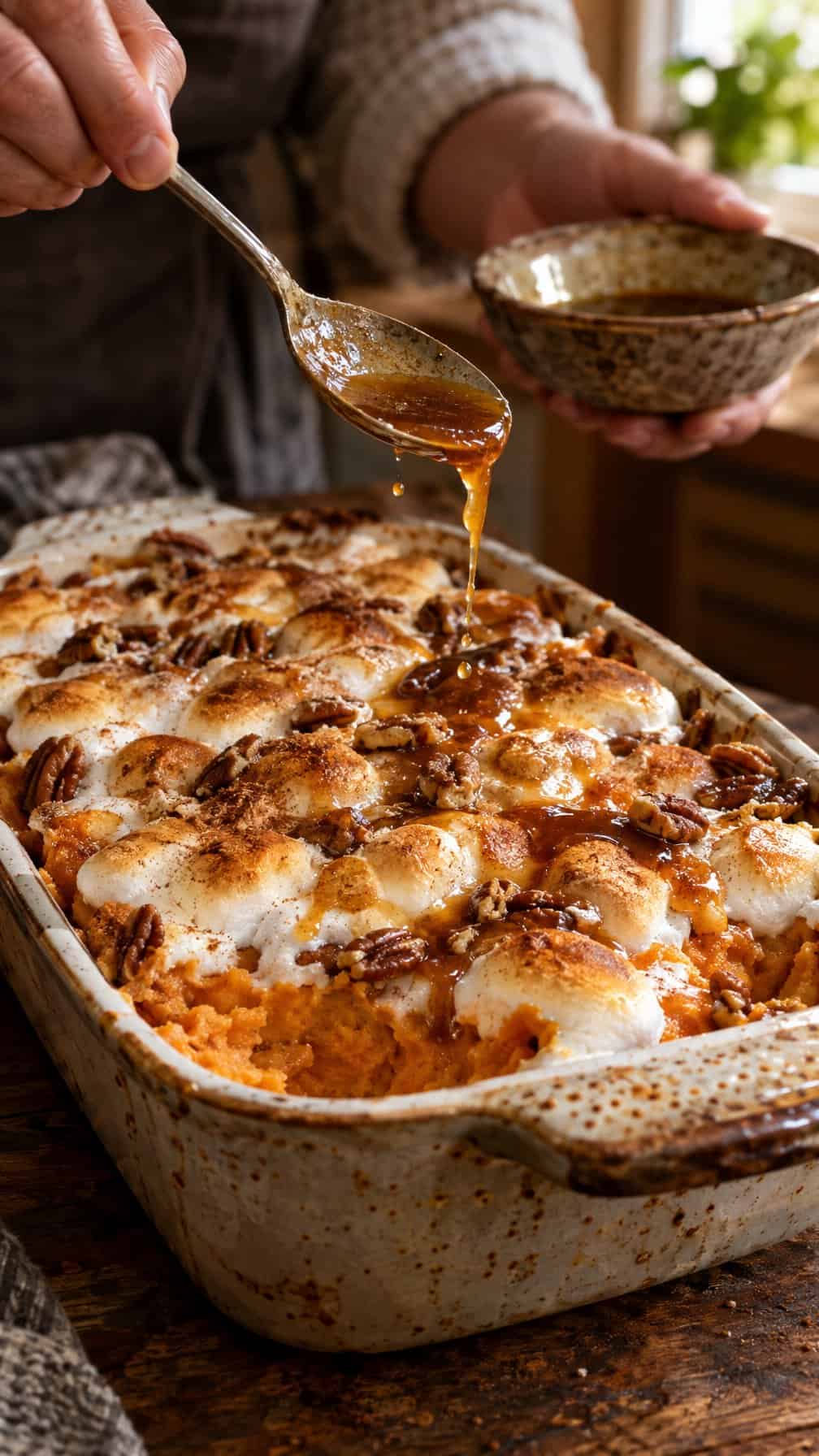
I make this sweet potato casserole recipe when I want a familiar dish with a little extra care. The buttery filling, warm spices, and marshmallow fluff create a soft texture with a lightly browned top.
You’ll find simple steps, useful swaps, serving ideas, storage guidance, and nutrition details for this sweet potato casserole with marshmallow fluff.
Why You Will Love This Recipe
You get a smooth, buttery sweet potato base with a lightly toasted marshmallow topping. Warm spices, brown sugar, and vanilla give it that familiar holiday flavor without making it difficult.
I first made sweet potato fluff for a family dinner when I wanted a side dish that could also pass as dessert. Serve it beside turkey and ham, or enjoy a small scoop after the meal.
This recipe works well because:
- You can bake the sweet potatoes for a richer, naturally sweet flavor.
- The filling is easy to prepare with mashed sweet potatoes, butter, brown sugar, and cream.
- You can choose your topping. Use homemade marshmallow fluff for soft peaks, or use mini marshmallows for a simpler option.
- You can add pecans or coconut if your guests enjoy extra texture.
- You can make parts ahead. Prepare the sweet potato filling, cover it, and warm it before adding the topping.
The toasted top gives your casserole a golden finish, while the orange filling stays soft underneath. Keep a close watch when you broil it because marshmallow topping browns quickly.
How to Make This Recipe
Bake and mash the sweet potatoes, mix them with a buttery egg custard, then finish the casserole with a toasted marshmallow topping. I make this dish when I want a sweet side that can also work as a holiday dessert.
Ingredients
Use orange-fleshed sweet potatoes, not canned yams, for the smoothest texture. Bake about 3 pounds of potatoes until fully soft, then scoop out the flesh and mash it.
- Unsalted butter: Adds richness and lets you control the salt.
- Brown sugar: Gives the filling a deeper flavor than white sugar alone.
- Large eggs: Help the casserole set as it bakes.
- Vanilla extract: Use pure vanilla for a clean flavor.
- Salt, ground cinnamon, and nutmeg: Balance the sugar and add warm spice.
- Milk or cream: Loosens the mashed potatoes into a creamy mixture.
- Mini marshmallows: Make the easiest marshmallow topping.
- Pecans, optional: Add a crisp, nutty layer under or over the marshmallows.
You don’t need flour in this recipe. The eggs firm the filling without making it heavy.
Instruments
You need a few basic tools to keep the process simple. A 9-by-13-inch baking dish works well for a full holiday batch.
- Baking sheet for cooking the sweet potatoes
- Fork for piercing the potatoes
- Potato masher or electric mixer
- Large mixing bowl
- Measuring cups and spoons
- Rubber spatula
- Small bowl for beating the eggs
- Oven mitts
I prefer a potato masher because it leaves a little texture in the filling. Use an electric mixer if you want completely smooth sweet potatoes, but mix only until blended.
If you make homemade marshmallow fluff instead of using marshmallows, you’ll also need an electric mixer, a clean metal or glass bowl, and a small saucepan. Egg whites, sugar, corn syrup, and cream of tartar create a stable marshmallow fluff.
Step-by-Step Instruction
- Heat your oven to 350 degrees. Butter the baking dish, then bake the sweet potatoes at 400 degrees until fork-tender, usually 45 to 60 minutes.
- Let the potatoes cool enough to handle. Remove the skins, then mash the flesh in a large bowl with butter, brown sugar, vanilla, salt, cinnamon, nutmeg, milk, and beaten eggs.
- Spread the mixture into the prepared dish. Add pecans if you’re using them, then cover the top with mini marshmallows.
- Bake for 25 to 30 minutes, until the center sets and the marshmallows turn light brown. Watch closely during the last few minutes because marshmallows can burn quickly.
- For homemade marshmallow fluff, spread it over the hot casserole after baking. Brown the topping briefly under the broiler or with a kitchen torch.
Tips & Tricks
Choose firm sweet potatoes with smooth skin and no soft spots. I bake similarly sized potatoes so they cook at the same rate, then mash them while they’re still warm for a smoother filling.
- Avoid a watery casserole: Bake the potatoes instead of boiling them when possible. Baking keeps excess moisture out and gives the filling a deeper flavor.
- Mash well: Use a potato masher for a little texture, or a hand mixer for a smoother fluff. Don’t overmix, or the potatoes can turn gummy.
- Taste before baking: Sweet potatoes vary in sweetness. You can reduce or add sugar before putting the filling in the dish.
Spread the marshmallows in an even layer so they brown at the same time. Keep the casserole on the middle rack while it bakes.
For a browned top, use the broiler for 30 to 90 seconds after baking. Watch it closely, since marshmallows can burn fast.
A kitchen torch also works well if you want more control. Toast the marshmallows lightly in small areas, keeping the flame moving so the topping doesn’t scorch.
Let the casserole rest for 10 minutes before serving. This gives the filling time to set and makes scooping easier.
Ingredient Substitute
I keep this casserole flexible because holiday kitchens rarely have every ingredient on hand. You can still make a smooth sweet potato base and a soft toasted topping with a few simple swaps.
- Mini marshmallows: Use marshmallow creme instead. Spread it over the warm casserole, then broil briefly until lightly browned. It melts faster than mini marshmallows, so watch it closely.
- Whole milk: Replace it with half-and-half for a richer texture, or use evaporated milk. For a dairy-free option, use plain oat milk or canned coconut milk.
- White sugar: Light or dark brown sugar works well and adds a mild caramel flavor. You can also use maple syrup, but reduce the milk slightly so the filling doesn’t become too loose.
- Margarine: Use unsalted butter in the same amount. If using salted butter, cut back on the kosher salt.
I sometimes add a small splash of orange juice for a fresh citrus note. Use about 1 to 2 tablespoons, and reduce the milk by the same amount.
- Bourbon: Leave it out for an alcohol-free dish, or use vanilla extract for warm flavor. Use 1 teaspoon vanilla for each tablespoon of bourbon.
- Coconut: Skip it if you don’t like the texture, or replace it with crushed cornflakes for a crisp topping.
- Nuts: Pecans add crunch, but you can use toasted pumpkin seeds or sunflower seeds for a nut-free option. Check labels carefully if you’re serving someone with an allergy.
What to Serve With This Recipe
I serve this sweet potato fluff casserole as a sweet side dish during a holiday meal. Its soft, sweet topping pairs best with savory foods and fresh vegetables.
- Roast turkey or ham: Salty, savory meat balances the sweet potatoes well.
- Herb stuffing: Choose a simple stuffing with celery, onion, and herbs for contrast.
- Green beans or Brussels sprouts: Roasted or lightly seasoned vegetables add color and a less-sweet option.
- Cranberry sauce: The tart flavor works well beside the buttery casserole.
- Dinner rolls: Use soft rolls to serve with turkey gravy and other holiday sides.
You can also add mashed potatoes and gravy if you’re serving a larger dinner. Keep the sweet potato fluff casserole portion modest, since it’s richer and sweeter than many vegetable sides.
Although it uses similar ingredients, this dish isn’t the same as sweet potato pie. Pie is usually served as dessert, while you can place this casserole beside the main course.
How to Store This Recipe
I like to pack leftover sweet potato fluff casserole soon after our holiday meal, so you can enjoy it again without losing too much texture.
- Refrigerator: Let the casserole cool, but don’t leave it out longer than 2 hours. Cover the dish tightly or move portions to an airtight container. Store it in the fridge for 3 to 4 days.
- Reheating: Warm individual servings in the microwave. For a larger portion, cover the dish with foil and bake at 350°F for 15 to 20 minutes, until hot in the center. Add fresh marshmallows near the end if the original topping looks soft.
- Freezer: Freeze the sweet potato base for up to 3 months in a freezer-safe container. I recommend freezing it without the marshmallow topping, since marshmallows can turn sticky after thawing.
Thaw frozen casserole in the refrigerator overnight before reheating. If the potato layer releases a little liquid, stir it gently before warming.
Nutritional Value
When I make sweet potato fluff casserole for a holiday meal, I treat it as a rich side dish or dessert. You get nutrients from the sweet potatoes and pecans, but the butter and sugars also add calories and fat.
A typical serving made with coconut, pecans, butter, and sugar provides about:
- 490 calories
- 26 grams of fat
- 63 grams of carbohydrates
- 49 grams of sugar
- 4 grams of protein
- 4 grams of fiber
Sweet potatoes add vitamin A, vitamin C, and potassium to your plate. Pecans provide some fiber and unsaturated fat, while eggs contribute a small amount of protein.
You can reduce the sugar or use less topping if you want a lighter serving. The nutrition will vary based on your recipe, portion size, and whether you add marshmallows, extra butter, or other toppings.


Sweet Potato Fluff Casserole
Ingredients
Equipment
Method
- Heat your oven to 350°F. Butter your 9-by-13-inch baking dish.
- On a baking sheet, bake the sweet potatoes at 400°F until fork-tender (about 45 to 60 minutes).
- Let the potatoes cool enough to handle, remove the skins, and place the flesh into a large bowl.
- Mash the sweet potatoes with the butter, brown sugar, vanilla, salt, cinnamon, nutmeg, milk, and beaten eggs until blended.
- Spread the sweet potato mixture evenly into the prepared baking dish. Add pecans if using, then cover the top in an even layer of mini marshmallows.
- Bake at 350°F for 25 to 30 minutes, until the center is set and the marshmallows turn light brown. (Watch closely so they do not burn).
- Let the casserole rest for 10 minutes before serving.
