Some nights you want something creamy and garlicky without babysitting a sauce for half an hour. This lemon Boursin pasta is the fix. A wheel of herbed cheese melts into hot pasta water and turns into a glossy sauce, and fresh lemon keeps all that richness from feeling heavy.
You need 10 minutes of prep and 20 minutes of cooking, for 30 minutes total. It makes 4 servings. You’ll use one pot for the pasta and one skillet for the sauce. There’s no roux, no oven and no long simmer.
Good to know: A good version of this dish tastes bright and garlicky. The sauce coats each piece of pasta in a thin, shiny layer with no pooling on the plate, and starchy pasta water is what makes that happen.
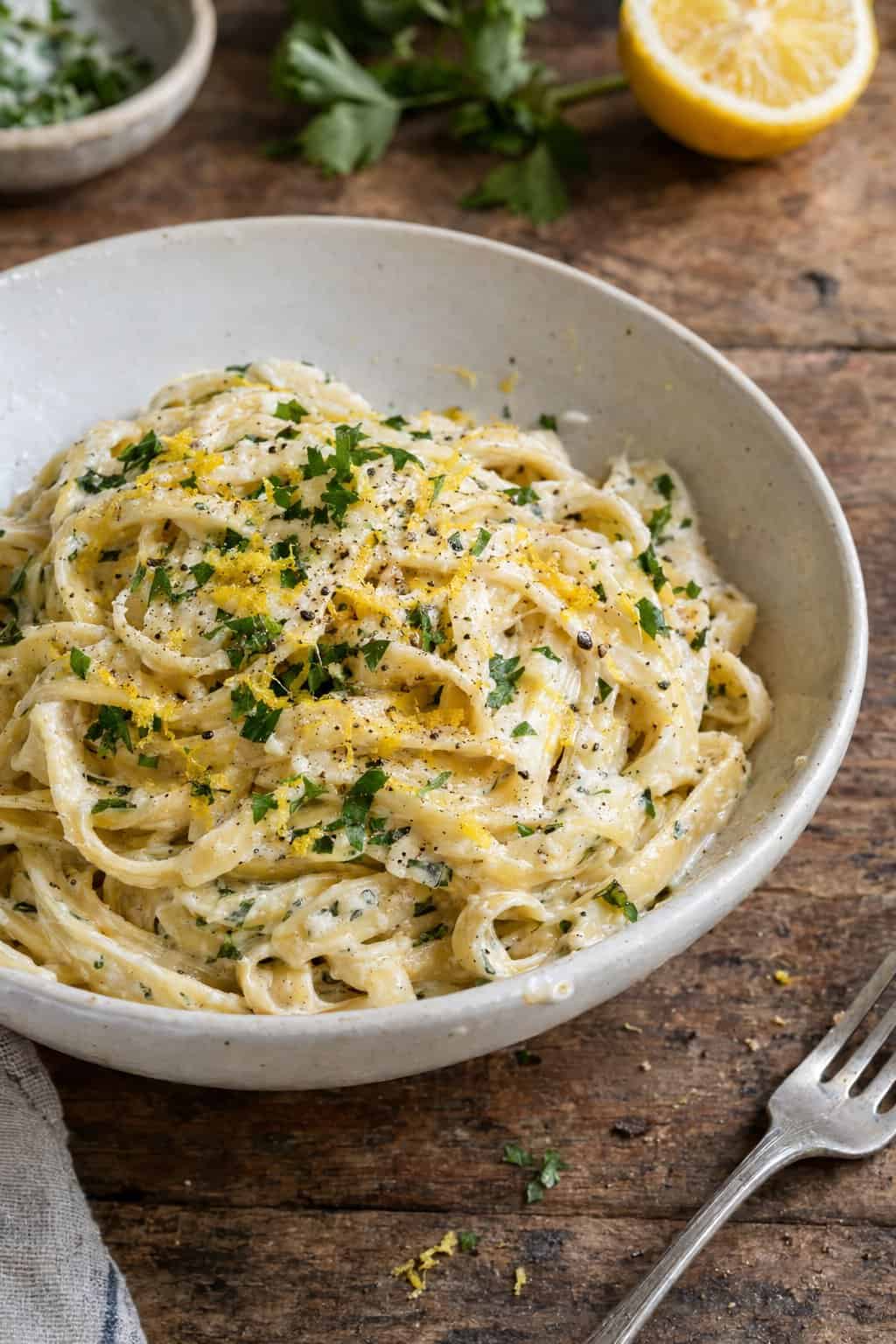
Why You’ll Love This Lemon Boursin Pasta
- Dinner in 30 minutes.
- The sauce has only a handful of ingredients, because Boursin cheese brings the garlic and herbs already blended in.
- Fresh lemon zest and juice cut through the cream. Every bite stays bright, even on the second helping.
- Cheap pantry staples.
- Rigatoni catches the sauce inside its tubes, so you get a creamy pocket with almost every forkful.
- It’s easy to build on. Peas, asparagus or grilled chicken all fit without changing the method.
How to Make Lemon Boursin Pasta
You cook the rigatoni in well-salted water and soften a shallot and garlic in olive oil. Then you melt Garlic & Fine Herbs Boursin into the skillet with hot pasta water and finish with lemon, Parmesan and parsley. Boursin is a brand of Gournay cheese, a soft, fresh French cheese. It melts smoothly at low heat, which is why it works so well as a sauce base.
Ingredients
For the pasta:
- 4 quarts water (3.8 L)
- 1 tablespoon kosher salt (12 g)
- 12 ounces dried rigatoni (340 g)
- 1 1/2 cups reserved pasta water (360 ml). You’ll use 3/4 to 1 1/4 cups.
For the sauce:
- 1 tablespoon olive oil (15 ml)
- 1 medium shallot, finely minced (about 1/4 cup, 40 g)
- 3 cloves garlic, minced (9 g)
- 1 package Boursin Garlic & Fine Herbs cheese (5.2 ounces, 150 g), at room temperature for 20 minutes
- 1/2 teaspoon freshly ground black pepper (1 g)
To finish:
- Zest of 1 large lemon (about 2 teaspoons, 4 g)
- 2 tablespoons fresh lemon juice (30 ml), from the same lemon
- 1/3 cup finely grated Parmesan cheese (30 g), plus more for serving. Parmigiano-Reggiano grated from a block melts best. Pre-grated Parmesan works, but it melts less smoothly.
- 2 tablespoons chopped fresh parsley (8 g). Use flat-leaf Italian parsley, or curly parsley if that’s what you have.
Equipment
- A 6- to 8-quart pot for the pasta. A big pot gives the rigatoni room so it doesn’t stick together.
- A 12-inch skillet or sauté pan. It needs to be wide enough to toss all 12 ounces of pasta.
- A liquid measuring cup (2-cup) for scooping out pasta water.
- A microplane or fine grater for the zest and Parmesan.
- A colander, or a spider strainer if you’d like to move the pasta straight into the skillet.
- Tongs or a silicone spatula.
Step-by-Step Instructions
Step 1: Cook the Pasta and Reserve the Cooking Water
- Bring 4 quarts of water to a rolling boil (212°F [100°C]) over high heat in your 6- to 8-quart pot.
- Add the salt and the rigatoni, and stir once in the first minute so the tubes don’t stick.
- Cook 1 to 2 minutes less than the package says, about 10 to 11 minutes. Bite a piece: it should be tender with a thin firm line in the center. It finishes cooking in the sauce.
- Before draining, scoop out 1 1/2 cups of the cloudy pasta water. That starch is what binds the sauce.
Step 2: Soften the Shallot and Garlic
- While the pasta boils, heat the olive oil in the 12-inch skillet over medium-low heat until it shimmers, about 1 minute.
- Add the shallot and cook for 2 to 3 minutes, stirring now and then, until it turns soft and see-through.
- Stir in the garlic and black pepper and cook for 1 minute. Pull the pan off the heat once it smells sweet and fragrant. The garlic should stay pale gold, because browned garlic turns bitter.
Step 3: Melt the Boursin into a Smooth Sauce
- Turn the heat to low and add 1/2 cup of the reserved pasta water. It will sizzle softly.
- Crumble in the Boursin and stir it constantly for 1 to 2 minutes.
- Watch for the lumps to vanish. You want a smooth, pale sauce about as thick as heavy cream. Keep the heat low, because high heat can make soft cheese turn grainy.
Step 4: Toss the Pasta with the Sauce
- Move the drained rigatoni into the skillet and keep the heat on low.
- Toss it for 1 to 2 minutes, adding pasta water 1/4 cup at a time.
- The sauce is ready when it looks glossy and clings to the tubes, with only a thin film left in the pan. If it looks tight or pasty, add another splash of water.
Step 5: Finish with Lemon, Parmesan, and Parsley
- Take the skillet off the heat.
- Stir in the lemon zest, lemon juice and Parmesan until the cheese melts in, about 30 seconds. Adding the lemon off the heat keeps its flavor fresh and keeps the sauce from splitting.
- Taste it and add salt or more pepper if it needs it.
- Fold in the parsley and serve right away, with extra Parmesan on top.
Tips and Tricks
- Weak, flat-tasting pasta comes from under-salted water. Use the full tablespoon of kosher salt in 4 quarts, because salting the cooked pasta later can’t fix the inside of the noodle.
- Take the Boursin out of the fridge 20 minutes early. Cold cheese melts slowly and leaves small lumps.
- If your sauce turns grainy or oily, the pan got too hot. Pull it off the heat, add 2 tablespoons of cold reserved pasta water, and stir hard for 30 seconds. It usually comes back together.
Why this works: Starch from the pasta water coats the fat droplets in the melted cheese and keeps them from pooling. That turns the cheese and water into one smooth, clingy sauce.
- Zest the lemon before you juice it. Zesting a squeezed lemon half is slippery and slow.
- Save more pasta water than you think you’ll need. The sauce thickens fast as it sits, so keep about 1/2 cup aside for loosening it at the table.
- Too sour? Stir in another 2 tablespoons of Parmesan. The extra salt and fat soften the sharp edge of the lemon.
- Crack the black pepper fresh. Pre-ground pepper tastes dusty next to the bright lemon.
- Plate on warm bowls if you can. The sauce stays creamy a few minutes longer.
Ingredient Substitutions
Most of these swaps are simple, but a few change the texture. The details are below.
Which Pasta Shapes Work Well?
Short shapes with ridges or tubes hold this sauce best.
- Penne, fusilli or rotini: swap in the same 12 ounces (340 g) and cook 1 to 2 minutes under the package time.
- Paccheri: these wide tubes hold big pockets of sauce. They need about 1/4 cup extra pasta water because they soak it up.
- Spaghetti, linguine or fettuccine all work. Long noodles need more tossing to coat, so add pasta water in small splashes and use tongs.
- Orzo turns the dish closer to a creamy risotto. Use 12 ounces and cut the cook time to about 8 minutes.
- For gluten-free pasta, use the same weight and drain it a full 2 minutes early. It goes soft fast, and it releases less starch, so you may need an extra 1/4 cup of water.
Cheese, Cream, and Aromatic Alternatives
- Heavy cream: add 1/4 cup (60 ml) with the first splash of pasta water in Step 3 for a richer, more forgiving sauce. It also tames the lemon a little.
- Other Boursin flavors work at the same 5.2-ounce (150 g) amount. Shallot & Chive is milder.
- No Boursin? Mix 5 ounces (140 g) of softened cream cheese with 1 extra minced garlic clove, 1 tablespoon of chopped chives and 1/4 teaspoon of salt. The sauce will taste tangier and less herby.
- Pecorino Romano can replace the Parmesan. Use 1/4 cup (22 g), because it’s saltier.
- Roasted garlic: swap the 3 raw cloves for 6 roasted cloves mashed into the oil. The flavor gets sweeter and softer.
The base recipe contains dairy and gluten. It has no eggs or nuts unless you add pine nuts.
Vegetable Add-Ins and Optional Toppings
- Peas: add 1 cup frozen peas (140 g) to the pasta pot for the last 2 minutes of cooking.
- Asparagus: cut 8 ounces (225 g) into 1-inch pieces and add them to the pot for the last 3 minutes. They should be bright green and still crisp.
- Chilli flakes: 1/4 to 1/2 teaspoon, stirred in with the garlic.
- Dried oregano: 1/2 teaspoon with the garlic adds an earthy note.
- Pine nuts: toast 2 tablespoons (18 g) in a dry skillet over medium-low heat for 3 to 4 minutes until golden and fragrant. Scatter them on top. They’re a tree nut, so skip them for nut allergies.
What to Serve With Lemon Boursin Pasta
A crisp green side or a lean protein balances this rich pasta best.
- Garlic bread for wiping up the last of the sauce.
- Grilled chicken. Season breasts with lemon, salt and oregano and cook to 165°F (74°C) inside, then slice them over the top.
- Roasted asparagus at 425°F (220°C) for 10 to 12 minutes.
- Arugula salad with olive oil and lemon.
- Garlicky sautéed shrimp.
The pasta is rich, so a sharp, bitter salad works well beside it. Arugula or shaved fennel with a light vinaigrette keeps the meal from feeling heavy.
For wine, a chilled Sauvignon Blanc fits well. Its citrus and herb notes match the lemon and the herbs in the cheese.
Serving tip: Have your sides ready before you toss the pasta, because the sauce tightens up within about 5 minutes of leaving the heat.
How to Store Lemon Boursin Pasta
Leftovers keep well in the fridge for a few days. Freezing is possible, but the sauce comes back softer and a little grainy.
Room-Temperature Limits and Refrigerator Storage
- Room temperature: no more than 2 hours, or 1 hour if your kitchen is above 90°F (32°C).
- Fridge: up to 3 days in an airtight container at 40°F (4°C) or below.
Cool the pasta for about 30 minutes before you put the lid on, so steam doesn’t make the pasta soggy. Expect the sauce to firm up into a thick coating overnight. Boursin cheese sets as it chills, and that’s normal.
Freezer Storage and Texture Trade-Offs
- Freezer: up to 1 month in a freezer-safe container or zip-top bag, with the air pressed out.
- Thawing: overnight in the fridge, about 8 to 12 hours.
Soft cheese sauces can separate when they freeze. The thawed sauce often looks a little grainy, and the pasta softens. It still tastes good, but it won’t be as silky as when it’s fresh.
How to Reheat Without Drying Out the Sauce
Use a 10-inch skillet over low heat. Add 2 tablespoons of water, or pasta water if you saved some, for each cup of pasta. Stir it often for 4 to 5 minutes until it’s hot and creamy again. A spoonful of heavy cream helps smooth out sauce that was frozen.
In the microwave, use 50% power and add the same splash of water. Heat for 1 minute at a time and stir between rounds. Full power makes the cheese turn oily. Brighten the leftovers with a fresh squeeze of lemon right before you eat.

Lemon Boursin Pasta
Ingredients
- 4 quarts water 3.8 L
- 1 tablespoon kosher salt 12 g
- 12 ounces dried rigatoni 340 g
- 1 1/2 cups reserved pasta water 360 ml, using 3/4 to 1 1/4 cups for the sauce
- 1 tablespoon olive oil 15 ml
- 1 medium shallot finely minced (about 1/4 cup, 40 g)
- 3 cloves garlic minced (9 g)
- 1 package Boursin Garlic & Fine Herbs cheese 5.2 ounces, 150 g, at room temperature
- 1/2 teaspoon freshly ground black pepper 1 g
- Zest of 1 large lemon about 2 teaspoons, 4 g
- 2 tablespoons fresh lemon juice 30 ml
- 1/3 cup finely grated Parmesan cheese 30 g, plus more for serving
- 2 tablespoons chopped fresh parsley 8 g
Equipment
- 6- to 8-quart pot
- 12-inch skillet or sauté pan
- 2-cup liquid measuring cup
- Microplane or fine grater
- Colander or spider strainer
- Tongs or silicone spatula
Method
- Bring 4 quarts of water to a rolling boil in a 6- to 8-quart pot. Add the kosher salt and rigatoni, stirring during the first minute to prevent sticking.
- Cook 1 to 2 minutes less than the package directions, about 10 to 11 minutes, until slightly firm in the center. Reserve 1 1/2 cups pasta water before draining.
- While the pasta cooks, heat olive oil in a 12-inch skillet over medium-low heat. Add the minced shallot and cook for 2 to 3 minutes until soft and translucent.
- Stir in the garlic and black pepper and cook for 1 minute until fragrant. Remove the skillet from the heat.
- Return the skillet to low heat and add 1/2 cup reserved pasta water. Crumble in the Boursin cheese and stir constantly for 1 to 2 minutes until completely melted and smooth. Keep the heat low to prevent the sauce from becoming grainy.
- Add the drained rigatoni to the skillet and toss over low heat for 1 to 2 minutes, adding reserved pasta water 1/4 cup at a time until the sauce becomes glossy and coats the pasta.
- Remove the skillet from the heat. Stir in the lemon zest, lemon juice, and Parmesan cheese until melted and combined. Taste and adjust salt and pepper as needed. Fold in the chopped parsley and serve immediately with extra Parmesan.
FAQ
Which Boursin Variety Should I Use?
Use Boursin Garlic and Fine Herbs. Its garlic and herb seasoning matches the lemon and carries most of the flavor in the sauce. Shallot & Chive also works if you’d like something milder.
Do I Need Heavy Cream for a Smooth Sauce?
No. Reserved pasta water and low heat are enough to make the Boursin smooth and glossy. Add 1/4 cup (60 ml) of heavy cream only if you want a richer sauce that holds up better as it sits.
How Can I Tell When the Pasta and Sauce Are Ready?
The pasta is ready when it’s tender with just a slight bite at the center. The sauce is ready when it looks shiny and coats the rigatoni without pooling. If you drag a spatula across the pan, the sauce should slowly flow back.
Can I Make the Sauce Ahead of Time?
It’s best made fresh, since the whole dish takes only 30 minutes. You can mince the shallot and garlic, zest the lemon and grate the Parmesan up to 1 day ahead and keep them chilled. The melted sauce thickens fast, so make it while the pasta cooks.
Can I Freeze Leftovers Without Losing the Creamy Texture?
Not completely. Creamy lemon Boursin pasta freezes for up to 1 month, but the sauce comes back a little grainy. Reheat it slowly with water and a splash of cream to bring back most of the smoothness.
