You pull a golden, buttery crust from the oven. It feels crisp under your fingers.
It smells rich and warm, like a bakery. When you slice into your Ina Garten quiche, the crust stays firm and flaky.
It never gets soggy or heavy. You taste buttery flakes that hold any filling.
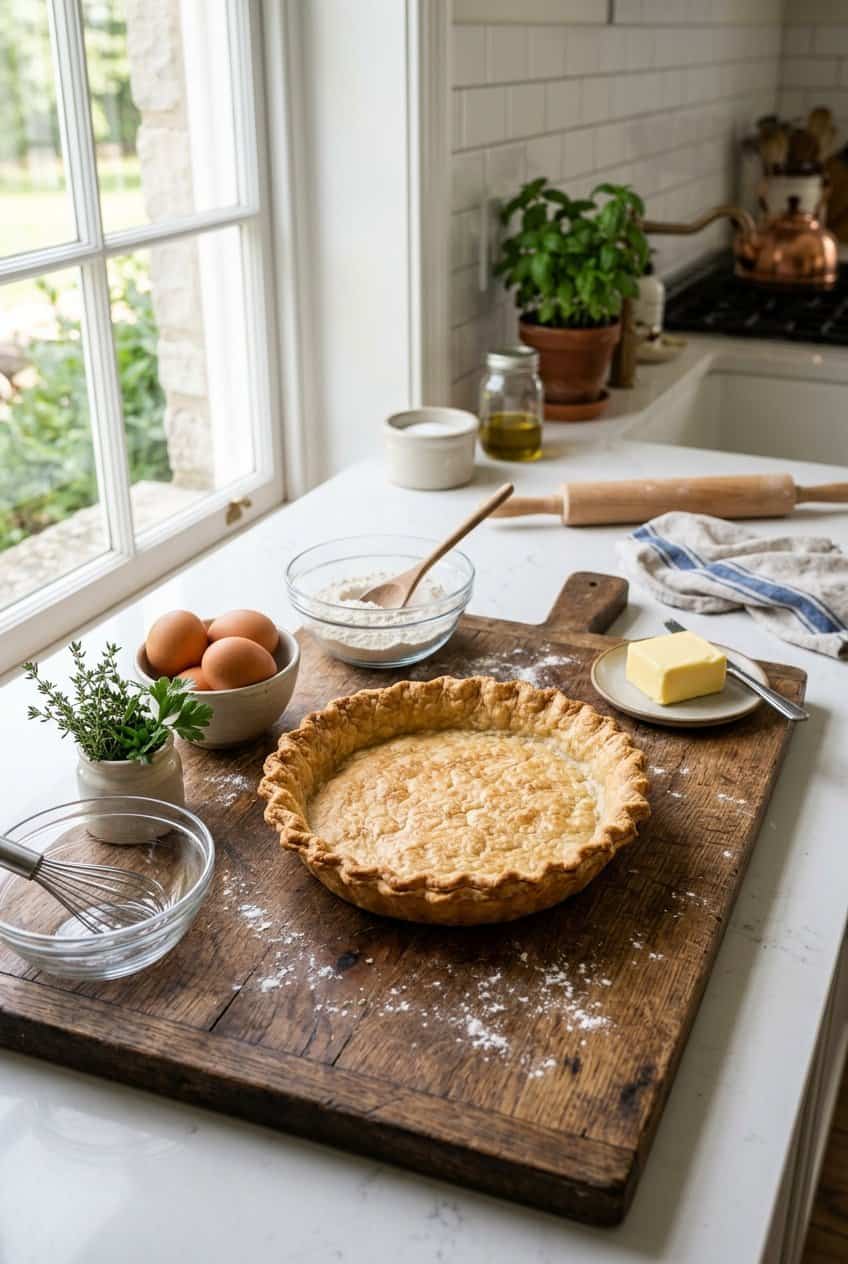
I tested this Ina Garten quiche crust many times in my kitchen. My family loved it every time.
You only need flour, cold butter, an egg, and ice water. Mix it quick, chill it, and you get dough that rolls and bakes up great.
I’ll show you how to make it. You’ll see how to keep it soft and how to store it.
I also share swaps, serving ideas, and tips. Your Ina Garten quiche crust will turn out right every time.
My Experience With Ina Garten Quiche Crust
When you make this crust, it feels simple. Mix flour and salt, then add cold butter.
Cut in the butter until you see small pieces. The butter bits help you get that flaky texture you want in a good quiche.
The first time I made it, I rushed the chill. The crust shrank in the pan.
Now I always chill the dough at least 30 minutes. You can see the crust holds its shape better.
Handle the dough as little as you can. I use my fingers and stop mixing when it comes together.
Here’s what I notice each time:
- Cold butter makes flakiness and keeps it soft.
- Chilling stops shrinking in the oven.
- Blind baking keeps the bottom crisp with wet fillings.
Roll it out to about 1/8 inch thick. It feels strong but still soft.
It fits in a 9-inch pan and does not break if you move slow. After blind baking, the crust turns light gold and smells so good.
Add your filling, and you get a firm base. It slices clean and looks nice for brunch.
How To Make Ina Garten Quiche Crust
You make this Ina Garten quiche crust recipe with cold butter and a simple egg mix. Keep the dough cold, work it quick, and chill the crust before baking.
Ingredients
For this quiche crust recipe, you need basic things:
- 1 ½ cups all-purpose flour
- ½ teaspoon sea salt
- 10 tablespoons cold unsalted butter, cubed
- 1 large egg
- 2 ½ tablespoons ice water
Use very cold butter. I cut mine small and chill it again for 10 minutes.
Cold butter makes little pockets in the dough. That gives the crust flakes, not heaviness.
Whisk the egg with the ice water before you start. This helps you mix in the wet part fast and easy.
Instruments
You can use a food processor or a pastry cutter. I like the food processor because it keeps the butter cold.
You also need:
- A mixing bowl
- Measuring cups and spoons
- Plastic wrap
- A rolling pin
- A 9-inch quiche or tart pan
- Parchment paper (for blind baking)
Keep your tools cool if you can. On hot days, I chill my mixing bowl for 10 minutes.
Step-By-Step Instruction
Turn the dough onto a floured counter. Press it together and make a flat disk.
Wrap it tight in plastic wrap and chill for at least 30 minutes. Skipping this makes the crust shrink.
Roll the dough to about ⅛ inch thick. Fit it in your pan gently, then trim the edges.
Freeze the lined pan for 20 to 25 minutes. This last chill helps the crust keep shape.
Tips & Tricks
You get a flaky crust when you keep things cold. I chill the butter and even the flour if it’s hot.
Cold butter makes steam, and that gives you layers. Handle the dough as little as you can.
The first time, I mixed too long and the crust turned firm.
- Pulse until the butter looks like crumbs.
- Stop mixing once it clumps.
If the dough gets sticky, dust your counter with flour. Do not add much flour to the dough or it gets tough.
Always chill the shaped crust before baking. I freeze mine in the pan for about 20 minutes.
For a crisp bottom, try blind baking:
- Line with parchment.
- Fill with pie weights or dry beans.
- Bake until the edges turn light gold.
Roll the dough to about 1/8 inch thick. Don’t stretch it to fit or it will shrink.
These small steps matter. Your crust bakes up crisp and ready for any filling.
Ingredient Substitute
You can swap things in this crust and still get good results. I tried a few changes when I ran out of stuff, and the dough still baked up nice.
If you need a flour change, try:
- Gluten-free all-purpose blend – Use a 1:1 blend. I tried it once and the crust held up well.
- Half whole wheat flour – Use half white, half wheat. It tastes a bit nutty and feels a little heavier.
For the fat, you have options:
- Salted butter – Use it and cut the salt.
- Vegetable shortening – This makes the crust easy to handle, but it tastes less rich.
- Dairy-free butter – Use it cold and it works.
If you do not have sea salt, use kosher salt. For fine table salt, use a bit less.
For liquid, keep it cold. If you have no egg, use 2–3 extra tablespoons ice water. The crust will be less rich but still bakes fine.
Always keep things cold. That matters most.
What To Serve With Ina Garten Quiche Crust
When you bake this Ina Garten quiche crust, you get a rich, flaky base. I like to keep the sides simple and fresh.
A crisp salad fits well with any quiche. Try:
- Mixed greens with lemon vinaigrette
- Sliced cucumbers and cherry tomatoes
- Baby arugula with shaved Parmesan
The fresh taste cuts the buttery crust. Roasted veggies also work, like with asparagus or spinach quiche.
I roast them hot so they brown but stay firm. You can serve:
- Roasted asparagus with olive oil and sea salt
- Steamed green beans with lemon
- Roasted carrots or zucchini
If you serve quiche for brunch, add something light. Fresh fruit makes the plate bright.
- Sliced melon
- Berries
- Grapes
When I try a new spinach quiche, I add crispy breakfast potatoes. They make the meal filling.
You can also serve soup with your quiche. A small bowl of tomato soup or veggie soup works for lunch or dinner.
How To Store Ina Garten Quiche Crust
When you make Ina Garten’s quiche crust, you can store it raw or baked. I make the dough a day early when I plan brunch.
If you store raw dough:
- Make a flat disk.
- Wrap it tight in plastic wrap.
- Put it in the fridge for up to 3 days.
You can freeze it for up to 2 months. I freeze extra dough a lot, and it bakes up flaky after you thaw it in the fridge.
If you pressed the dough in a pan, cover it well. Keep it in the fridge for up to 2 days.
For a fully baked crust, let it cool first. Then:
- Wrap it tight in plastic wrap or foil.
- Store it in the fridge for up to 3 days.
If you leave it open, it dries out fast. Air makes it hard.
You can freeze a baked crust too. Wrap it well and freeze for up to 1 month.
When you want to use it, thaw it in the fridge. Warm it in a 350°F oven for 5–8 minutes to make it crisp.
Nutritional Value
When you make this Ina Garten quiche crust, you use easy stuff: flour, butter, egg, and water. The quiche crust nutrition comes from carbs and fat, with a bit of protein.
One slice of crust (from 8 slices) has about:
- 180–220 calories
- 12–15 grams fat
- 15–18 grams carbs
- 2–4 grams protein
- 150–200 mg sodium (depends on added salt)
Most calories come from butter. Butter gives rich taste and flakes, but it adds fat.
You also get carbs from the flour. These give structure, but not much fiber unless you use wheat flour.
When I used less butter, the crust turned dry. The fat matters for taste and texture.
If you want to change the nutrition, you can:
- Mix in whole wheat flour for more fiber
- Lower the salt to cut sodium
- Use a gluten-free blend if you need
The filling adds more calories than the crust. The crust is the base, but cream and cheese add more.


Ina Garten Quiche Crust (Buttery Flaky Pastry)
Ingredients
Equipment
Method
- Place the flour and salt in the bowl of a food processor fitted with the steel blade (or in a mixing bowl). Pulse or whisk to combine.
- Add the cold cubed butter and pulse 8–12 times (or cut in with a pastry cutter) until the butter is the size of small peas and the mixture looks crumbly.
- Whisk the egg with 2½ tablespoons ice water. With the food processor running (or while stirring), pour the egg mixture in and pulse just until the dough begins to come together into a ball. Add another ½ tablespoon ice water only if needed. Do not overmix.
- Turn the dough out onto a lightly floured surface. Quickly press it into a flat disk. Wrap tightly in plastic wrap and refrigerate for at least 30 minutes (or up to 2 days).
- On a floured surface, roll the chilled dough into an 11–12 inch circle about ⅛ inch thick. Gently transfer to the 9-inch quiche pan, pressing it into the bottom and sides without stretching. Trim excess dough and crimp or flute the edges if desired.
- Prick the bottom and sides lightly with a fork. Freeze the lined pan for 20–25 minutes (or refrigerate for 30 minutes).
- For blind baking (recommended for quiche): Preheat oven to 375°F. Line the chilled crust with parchment paper and fill with pie weights or dried beans. Bake 15–18 minutes until the edges are light golden. Remove weights and parchment, then bake 5–8 minutes more until the bottom looks dry and lightly golden. Cool slightly before adding filling.
Notes
Per slice (1/8 of crust only, approximate): Calories 180–220, Fat 12–15g, Carbohydrates 15–18g, Protein 2–4g, Sodium 150–200mg. Most calories and fat come from butter, which creates the signature flakiness.
Frequently Asked Questions
A good quiche starts with a strong, flaky base. The crust, how you bake it, and your cheese all matter.
What is the difference between a pie crust and a quiche crust?
You can use a buttery pie crust for sweet pies and quiche. A quiche crust has less sugar and a bit more salt.
This keeps the taste neutral for the filling. When I test crusts, I care about structure.
A flaky pie crust for dessert can be soft. A quiche crust needs to be firm to hold eggs, cream, cheese, and extras like bacon or spinach.
What type of crust works best for a classic quiche Lorraine?
For a classic quiche Lorraine, use a crust made with all butter. It should taste rich but not sweet.
I mix flour, cold butter, salt, and ice water for the dough. That clean taste matches bacon, eggs, cream, and Gruyère.
You can bake it in a tart pan with straight sides. This keeps the crust neat and easy to slice.
How can you keep a quiche crust crisp instead of soggy?
You need to stop moisture from the filling. Custard with eggs and cream makes steam as it bakes.
To keep the crust crisp, chill the dough before rolling. Chill it again after shaping.
Blind-bake the crust before you add the filling. Brush the warm crust with egg white to seal it.
Don’t use too many wet vegetables in the filling. I found this out after a spinach quiche turned soggy.
Pre-baking and draining veggies well keeps the crust firm.
Should you blind-bake the crust before adding the quiche filling?
Yes, you should blind-bake most of the time. This step sets the crust before you pour in the custard.
Line the cold crust with parchment and fill with pie weights. Bake until the edges turn light golden.
Take out the weights, then bake a few minutes more. I skip this step only if the filling is very thick and not wet, but that’s rare.
Can you make an all-butter crust without using shortening?
Yes, you can use only butter for the crust. Ina Garten does this for flavor.
Cold butter makes steam and forms layers as it bakes. That gives you a flaky pie crust.
Work fast and keep everything cold. If the butter melts, the dough won’t stay flaky.
What are the best cheeses to use for a rich, flavorful quiche?
Pick cheeses that melt well and taste great.
For a classic quiche, I like:
- Gruyère for a nutty, sweet taste
- Swiss cheese for a soft, creamy feel
I also add:
- Sharp cheddar for a stronger bite
- Parmesan for a little salty kick
I tried only mild cheese before. It just tasted boring.
Bold cheese, like Gruyère, makes the whole quiche pop.
