Warm, rustic, and crisp outside, soft inside—this bread feels special. You only need simple ingredients to make it.
Wheat or barley flour gives an earthy taste. The loaf is flat, golden, and easy to tear.
Jesus ate simple wheat or barley flatbread. People baked it daily and ate it with basic foods like fish, oil, or olives.
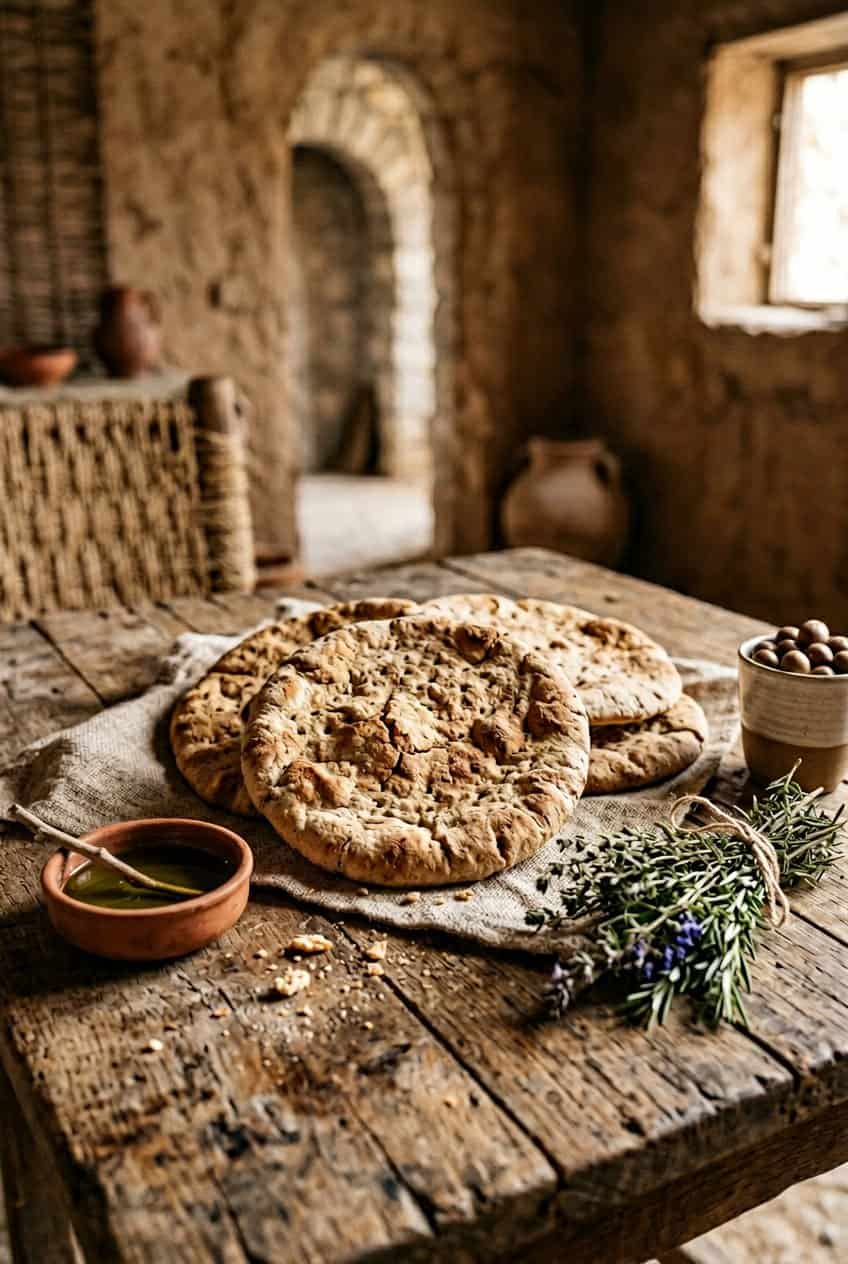
You don’t need fancy tools or rare items. With pantry staples and a hot oven or skillet, you can bake a loaf that feels ancient.
I tried this recipe many times to keep it real and easy.
As you bake, you’ll learn its history. You’ll also see how to shape and cook it well.
My Experience With Bread Jesus Ate
When I bake bread like people did in Jesus’ time, I notice how simple it is. I tried both barley and wheat flour.
Barley feels heavy and rustic. Wheat gives a softer bite.
The first time, I mixed barley flour, water, and a bit of salt. I kept the dough basic.
You don’t need yeast for a flat, dense loaf like daily bread in first-century Judea. I pressed the dough thin and baked it on a hot stone.
Focus on the texture when you try this at home. It should be:
- Flat and round
- Slightly chewy
- Firm enough to tear by hand
- Not fluffy like sandwich bread
When I baked unleavened bread during Passover, I moved fast so the dough didn’t rise. That helped me picture the bread Jesus broke at the Last Supper.
You notice something when you tear this bread. Sharing feels direct and personal.
The bread becomes part of the meal in a hands-on way.
When you bake and eat it, you see how ordinary ingredients—grain, water, salt—were the center of life.
How To Make Bread Jesus Ate
You can make simple flatbread with whole grains, water, and salt. I tested this bread recipe many times for a true, old taste.
Ingredients
You only need a few things. Ancient bakers used what they had.
- 2 cups whole wheat or barley flour
- 1/2 teaspoon salt
- 2/3 cup lukewarm water (add slowly)
- 1 tablespoon olive oil (optional)
- 1 teaspoon honey or date syrup (optional)
I use barley flour when I want a rustic taste. Barley was common in the Bible.
Whole wheat works well and is easy to find. Don’t use yeast if you want real flatbread.
Instruments
You don’t need special tools. Keep it simple.
- Large mixing bowl
- Wooden spoon or your hands
- Flat surface for kneading
- Rolling pin (or just your hands)
- Cast iron skillet, griddle, or baking stone
I like a cast iron skillet because it holds heat. In old times, people baked on hot stones.
Heat matters more than fancy gear. Get your pan hot before you cook the dough.
Step-By-Step Instruction For Bread Jesus Ate
- Put the flour and salt in a bowl. Stir them together.
- Pour in lukewarm water slowly. Mix with your hands until you get a soft dough.
- If it’s sticky, add a bit more flour. If it’s dry, add a little water.
- Knead the dough on a flat surface for about 8 minutes. Make it smooth and firm, not wet.
- Cover the dough with a cloth and let it rest for 20 to 30 minutes.
- Divide the dough into 4 to 6 balls. Roll each into a thin round, about 1/4 inch thick.
- Place each round on a hot skillet. Cook for 1 to 2 minutes per side.
- You should see brown spots. Serve the bread warm.
- Tear it by hand and eat it with olive oil, fish, or lentils.
Tips & Tricks
I rushed the resting time the first time I made this bread. The dough felt tight and hard to shape.
Let the dough rest at least 30 minutes. The flour soaks up water and gets easier to roll.
Keep the ingredients simple, but measure well. Small changes matter.
- Use wheat flour for chewy bread.
- Add water slowly if the dough feels dry.
- Keep salt between ½ and 1 teaspoon.
- Drizzle good olive oil for a softer bite.
If your dough sticks, dust with flour. Don’t add too much.
Heat control matters. Cook in a dry, heavy skillet over medium heat.
- Too hot? The outside browns too fast.
- Too cool? The bread turns pale and stiff.
Look for golden spots and small bubbles. Flip once and press gently.
For softer bread, cover the cooked rounds with a towel as they cool. Steam keeps the bread soft.
Warm leftovers in a skillet for a few seconds on each side.
Ingredient Substitute
You can keep this bread simple, but you have options. I tried different swaps, and each one changes the bread a bit.
If you don’t have whole wheat flour, try:
- Barley flour – Dense and earthy. I like it for rustic bread.
- Spelt flour – Softer, easy to knead. Use less water.
- Half whole wheat, half all-purpose flour – Lighter bread, still with whole grain taste.
Barley alone made my dough crack. I fixed it with olive oil and more water.
For liquid and extras, you can also change things:
- Water – Add slowly. Flours soak up water differently.
- Olive oil – Leave it out for firmer bread.
- Honey or date syrup – Skip for a savory bread.
- Salt – Use less if serving with salty foods.
When you change things, check the dough. It should feel soft, not sticky or dry.
What To Serve With Bread Jesus Ate
You can serve this bread with foods people ate in Jesus’ time. I like to keep the meal plain.
The bread works best with things you can scoop or dip.
When I first tried this recipe, I set it out with olive oil and a pinch of salt.
Try it with:
- Olive oil for dipping
- Olives and dried figs or dates
- Lentil stew or mashed chickpeas
- Fresh herbs like mint or parsley
- Goat cheese or sheep’s cheese
- Grilled or broiled fish
Tear the bread and dip it into lentils or oil. That’s how people ate it.
The flat shape makes it easy to scoop thick foods.
I once served it with lentil stew and cumin. The bread held up well and made the meal feel complete.
For a lighter meal, add cucumbers, almonds, and pistachios. Keep the flavors simple.
How To Store Bread Jesus Ate
This flatbread dries out faster than sandwich bread. You need to store it well.
I left pieces out overnight once. By morning, they felt stiff.
Now I wrap them while still a bit warm.
For short-term (up to 2 days):
- Let the bread cool.
- Stack and wrap in a towel.
- Put in an airtight container or bag.
- Keep at room temp, away from heat.
The towel controls moisture. The container keeps bread from drying out.
To reheat:
- Warm in a dry skillet for 30–60 seconds per side.
- Or wrap in foil and heat in a 300°F oven for 5–7 minutes.
I like the skillet best. It brings back the soft texture.
For longer storage:
- Put parchment between pieces.
- Seal in a freezer bag.
- Freeze for up to 2 months.
You can reheat straight from the freezer.
Nutritional Value
When you bake with whole wheat or barley flour, you get steady fuel. I felt full longer after eating this bread.
Whole grain flatbread has:
- Fiber for digestion and feeling full
- B vitamins for energy
- Minerals like iron and magnesium
- Complex carbs for steady energy
You skip refined flour and keep more nutrients. Barley has fiber that helps your heart.
This bread is simple. No preservatives or added sugars.
If you add olive oil, you get healthy fats.
I like knowing what goes in my bread. Just flour, water, and salt—like people ate in the first century.
Frequently Asked Questions
Bread in Jesus’ time meant barley or wheat flatbread. People baked it on stones or in clay ovens.
During Passover, families ate unleavened bread, or matzah. The Gospels link this bread to the Last Supper.
What type of bread was commonly eaten in first-century Judea during Jesus’ lifetime?
You’d find leavened flatbread made from barley or wheat flour. Most families mixed flour with water, salt, and a bit of old dough.
Barley bread fed poorer families. Wheat bread cost more and felt softer.
People shaped dough into round, thin loaves. They baked them on hot stones or clay ovens.
You tore the bread by hand and shared it at the table.
When I tried a barley version, I noticed it tasted dense and earthy. It felt filling and simple, just like meals long ago.
Which Bible passages mention the bread used at the Last Supper?
The Last Supper appears in Matthew 26:26, Mark 14:22, and Luke 22:19.
Jesus took bread, gave thanks, broke it, and gave it to his friends.
John 13 talks about the meal but shows Jesus washing feet.
John 6:35 says, “I am the bread of life,” which links bread to Jesus’ words.
The meal happened during Passover.
That means the bread was unleavened bread.
Was the bread associated with Jesus typically unleavened, and why?
People ate leavened bread most days.
Families kept dough to start new bread, like sourdough.
But at Passover, Jewish law said to eat unleavened bread, or matzah.
Exodus 12 says the Israelites left Egypt so fast, their dough did not rise.
So Jesus used unleavened flatbread at the Passover meal.
That bread became important for Christians who remember the Last Supper.
How does Passover tradition inform what kind of bread Jesus would have eaten?
Passover rules said to remove leaven from the house for seven days.
You could only eat matzah, a flatbread made without yeast.
Jesus and his friends met for a Passover meal.
The bread on the table was flat, baked quickly, with no leaven.
What is a historically plausible recipe for first-century unleavened bread from the region?
I like to picture what Jesus ate at Passover.
Sometimes I bake simple unleavened flatbread at home.
You just need:
- 2 cups barley or whole wheat flour
- 3/4 to 1 cup water
- 1/2 teaspoon salt
Mix the flour and salt in a bowl.
Add water a bit at a time and stir it in.
When the dough gets firm, knead it for five minutes.
It should feel smooth, not sticky.
Split the dough into balls.
Roll each ball flat, about 1/8 inch thick.
Heat a dry pan or baking stone until very hot.
Cook each bread for one or two minutes on each side.
You’ll see brown spots and little bubbles.
The first time, I made my bread too thick.
It was chewy, not crisp.
Keep it thin, and it cooks fast and tastes like matzah.
Is naan considered unleavened bread, and how does it compare to ancient flatbreads?
Naan is not usually unleavened. Most naan recipes use yeast or baking powder.
Sometimes people add yogurt to help the dough rise. That makes naan soft and fluffy.
Ancient Judean flatbreads used old dough for some rise. Passover bread was totally flat and had no leaven.
Naan bakes in a tandoor oven. It often has oil or dairy mixed in.
First-century unleavened bread was much simpler. People just used flour, water, and salt.
If you want bread like Jesus ate at Passover, use plain, flat, unleavened bread. Naan is tasty, but it’s not the same thing.


Bread Jesus Ate (Ancient Biblical Flatbread / Unleavened Flatbread)
Ingredients
Equipment
Method
- In a large bowl, combine the flour and salt. Stir well.
- Gradually add lukewarm water (start with ⅔ cup) while mixing with your hands until a soft, pliable dough forms. Add olive oil or honey if using. If too sticky, add a little more flour; if too dry, add a splash of water.
- Knead the dough on a lightly floured surface for 5–8 minutes until smooth and firm.
- Cover with a clean cloth and let rest for 20–30 minutes (this relaxes the dough for easier shaping).
- Divide the dough into 4–6 equal balls. Roll or press each into a thin round, about ¼-inch thick.
- Heat a dry cast iron skillet or griddle over medium heat until hot.
- Cook each flatbread for 1–2 minutes per side until golden brown spots appear and small bubbles form. Press gently with a spatula if needed.
- Wrap cooked breads in a clean towel to keep soft while you finish the batch. Serve warm, torn by hand.
